

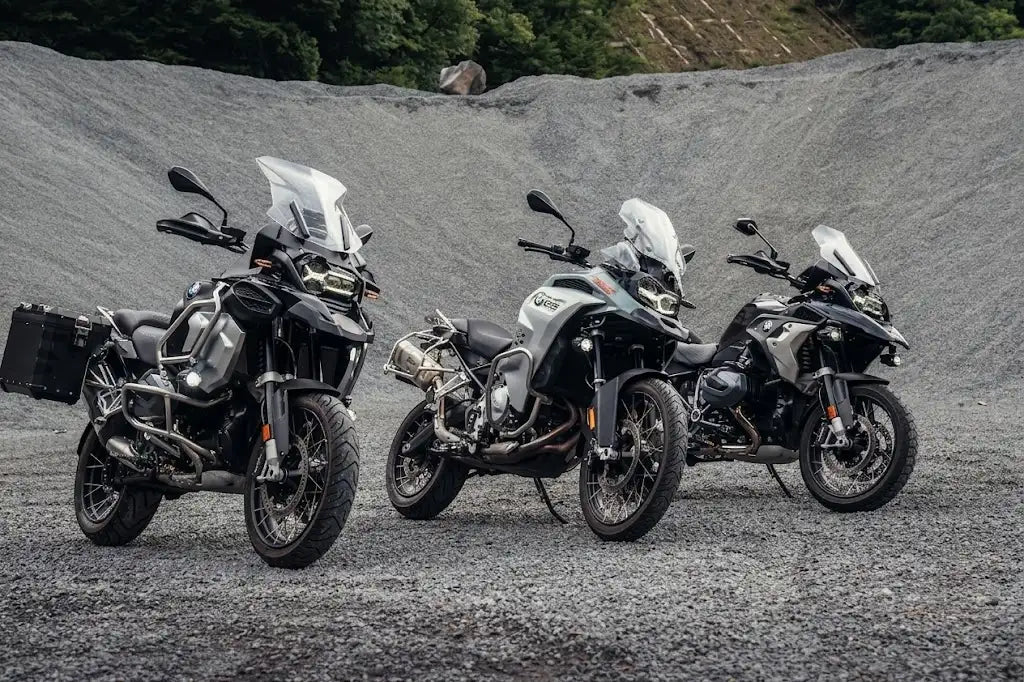
If you're considering an ADV (Adventure) motorcycle, engine displacement shouldn't be the only thing you compare.
An ADV can cover commuting, road touring, and some unpaved riding, but differences in weight, seat height, power, and suspension can make two ADV motorcycles feel very different in everyday use. For beginners, there is also no single "best" engine size. A motorcycle that feels manageable is often more important than the number on the engine.
Before choosing a model, start with three questions:
- Where will I ride most often?
- Do I actually need off-road capability?
- Do I value lighter handling or more power and touring capacity?
What Kind of Riding Is an ADV Motorcycle Good For?
Versatility is one of the main reasons riders choose an ADV.
An ADV can handle daily commuting, weekend road rides, and long-distance touring. Depending on its tires, suspension, ground clearance, and chassis setup, some models can also handle gravel roads and other unpaved surfaces.
However, "Adventure" covers a broad range of motorcycles.
Some models are more road-oriented, while others place greater emphasis on unpaved riding. Instead of relying on the name alone, start with your typical riding environment and then compare the motorcycle's specifications.
If most of your riding is in cities and on highways, a more road-focused ADV may make sense. If you regularly expect to ride gravel roads, trails, or other unpaved surfaces, wheel size, tires, suspension, and ground clearance become more important.
Mid-Size vs. Large-Displacement ADV: The Difference Isn't Just Engine Size
A 700–900cc ADV and a 1,000cc-plus ADV obviously differ in engine performance, but displacement is only part of the equation.
The following models help illustrate how ADV motorcycles can differ in size and weight:
|
Model |
Displacement |
Ready-to-Ride / Wet Weight |
Seat Height |
|
689cc |
459 lb / approx. 208kg |
34.4 in / approx. 874mm |
|
|
889cc |
215kg fully fueled |
880mm |
|
|
895cc |
482 lb / approx. 219kg fully fueled |
34.2 in / approx. 869mm |
|
|
1084cc |
510 lb / approx. 231kg |
34.3 in / approx. 871mm |
|
|
1300cc |
523 lb / approx. 237kg fully fueled |
33.4 in / approx. 848mm |
Note: Manufacturers and markets may use different measurement methods for vehicle weight and seat height. Always check the local official specifications before buying.
Why Should Weight Be Part of the Comparison?
At highway speeds, differences in weight may not always be obvious.
They can become much more noticeable during low-speed U-turns, parking, maneuvering, and riding on loose surfaces.
For example, the Ténéré 700 has a manufacturer-listed wet weight of 459 lb (about 208kg), while the R 1300 GS is listed at 523 lb (about 237kg) fully fueled. A difference of nearly 30kg can be noticeable when maneuvering in tight parking spaces or at low speeds.
That makes weight a useful number to consider alongside engine displacement.
Where Does a Larger Engine Make More Difference?
The extra power of a large-displacement ADV can be useful when you need more performance reserve, such as:
- Long highway trips;
- Carrying a passenger;
- Carrying substantial luggage;
- Higher-speed overtaking;
- Long-distance touring where additional performance reserve is useful.
For mainly urban riding, paved roads, and weekend mountain rides, a mid-size ADV can already offer substantial performance.
A larger engine is therefore better viewed as additional capability, rather than an automatic upgrade for every rider.
Can Beginners Ride an ADV Motorcycle?
Yes.
If you're buying your first ADV, however, it's worth prioritizing how manageable the motorcycle feels rather than choosing an engine size first.
Seat Height Should Be Tested, Not Just Measured
ADV motorcycles are often taller than standard street bikes, but seat heights vary considerably.
For example, the 2026 BMW F 900 GS has a standard seat height of about 34.2 inches, while the BMW R 1300 GS is listed at about 33.4 inches. Some models also offer lower-seat or alternative height configurations.
That's why there is no simple height rule for deciding whether an ADV will fit you.
When you sit on a motorcycle, pay attention to:
- Whether you can support it confidently at a stop;
- How natural low-speed steering feels;
- How stable it feels on an incline;
- Whether reversing and maneuvering feel manageable.
Inseam length and seat width can make just as much difference as the published seat-height number.
Do Beginners Need to Start With a Small ADV?
Not necessarily.
There is no universal engine-size requirement for a beginner. If you have limited experience with larger motorcycles, however, a lighter model can make it easier to develop confidence with low-speed control.
For example, the Honda CRF300L Rally has a manufacturer-listed curb weight of 333 lb (about 151kg), compared with 459 lb (about 208kg) for the Ténéré 700. That difference can be noticeable when parking, making U-turns, or managing the motorcycle when it begins to lean.
A simple way to approach the choice is:
|
Riding Experience |
Models to Consider |
|
New to ADV riding |
Lightweight or smaller-displacement ADV |
|
Some experience |
700–900cc mid-size ADV |
|
More experience |
Choose according to touring, payload, and performance needs, including 1000cc+ |
This is only a reference, not a required progression.
How Can You Tell Whether an ADV Is More Road- or Off-Road-Oriented?
Once you've narrowed down your options, look at the motorcycle's specifications.
Front Wheel Size
Common ADV front-wheel sizes include 21, 19, and 17 inches.
21-inch
More common on ADV motorcycles with a stronger off-road focus.
19-inch
Often used as a compromise between paved-road handling and some unpaved capability.
17-inch
Generally more road-oriented.
For example, the Ténéré 700 and KTM 890 Adventure R use 21-inch front wheels, while the standard BMW R 1300 GS uses a 19-inch front wheel.
However, wheel size alone doesn't determine off-road capability.
Suspension Travel
Suspension travel is another useful specification.
Longer travel generally gives the suspension more room to work over uneven terrain, but it shouldn't be used as a single measurement to determine whether a motorcycle is suitable for off-road riding.
For example:
- Ténéré 700: 8.3 inches front / 7.9 inches rear;
- KTM 890 Adventure R: 240mm front / 240mm rear;
- BMW F 900 GS: designed with a suspension and chassis package that places greater emphasis on unpaved riding.
If you plan to ride off pavement regularly, consider suspension together with tires, ground clearance, suspension setup, and overall weight.
What Should You Check Before Buying an ADV?
Once you've narrowed down your choices, use these questions as a final check:
1. Riding environment
How much time will you spend in the city, on highways, touring, or on unpaved roads?
2. Weight
Can you comfortably park, reverse, and make low-speed turns?
3. Seat height
Can you find a stable and natural way to support the motorcycle when stopped?
4. Wheels and tires
Are you mainly riding on pavement, or do you need more unpaved-road capability?
5. Suspension and ground clearance
Do they match the surfaces you actually plan to ride?
6. Payload
Will you regularly carry luggage or a passenger?
7. Power
Do you actually need the additional performance reserve of a larger engine?
Frequently Asked Questions About ADV Motorcycles
Are ADV motorcycles suitable for beginners?
Yes. Beginners can ride an ADV, but weight, seat height, and low-speed control are important considerations. Sitting on or test riding the motorcycle can help determine whether it feels manageable.
Is a mid-size ADV better than a large-displacement ADV?
Neither is universally better. Mid-size models can offer a useful balance of weight and everyday handling, while larger models generally provide more performance reserve. The right choice depends on your riding needs.
Do beginners need to start with a small-displacement ADV?
Not necessarily. There is no fixed engine-size rule. Weight, dimensions, seat height, and riding experience are all relevant.
Are 21-inch front wheels always better for off-road riding?
Not always. A 21-inch front wheel is common on more off-road-oriented ADV motorcycles, but tires, suspension, ground clearance, and vehicle weight also affect real-world performance.
What should I look for when buying an ADV motorcycle?
Start with your riding environment, then compare weight, seat height, engine displacement, wheel and tire setup, suspension, ground clearance, and payload requirements.
Final Thoughts
Choosing an ADV isn't about finding the motorcycle with the biggest engine or the longest list of specifications.
It's about finding a motorcycle that matches the way you actually ride.
For commuting and paved-road touring, a mid-size model may already provide everything you need. For frequent long-distance travel or heavier loads, a larger ADV may offer useful additional capability. If unpaved riding is a major part of your plans, weight, tires, suspension, and chassis setup deserve closer attention.
Ultimately, the ADV worth choosing is the one that lets you ride comfortably, confidently, and within the demands of your real-world riding.
Aktie:
INNOVV K7 Dash Cam for BMW R 1300 GS: Installation & Test
Which Motorcycle Gloves Work With Touchscreens?