

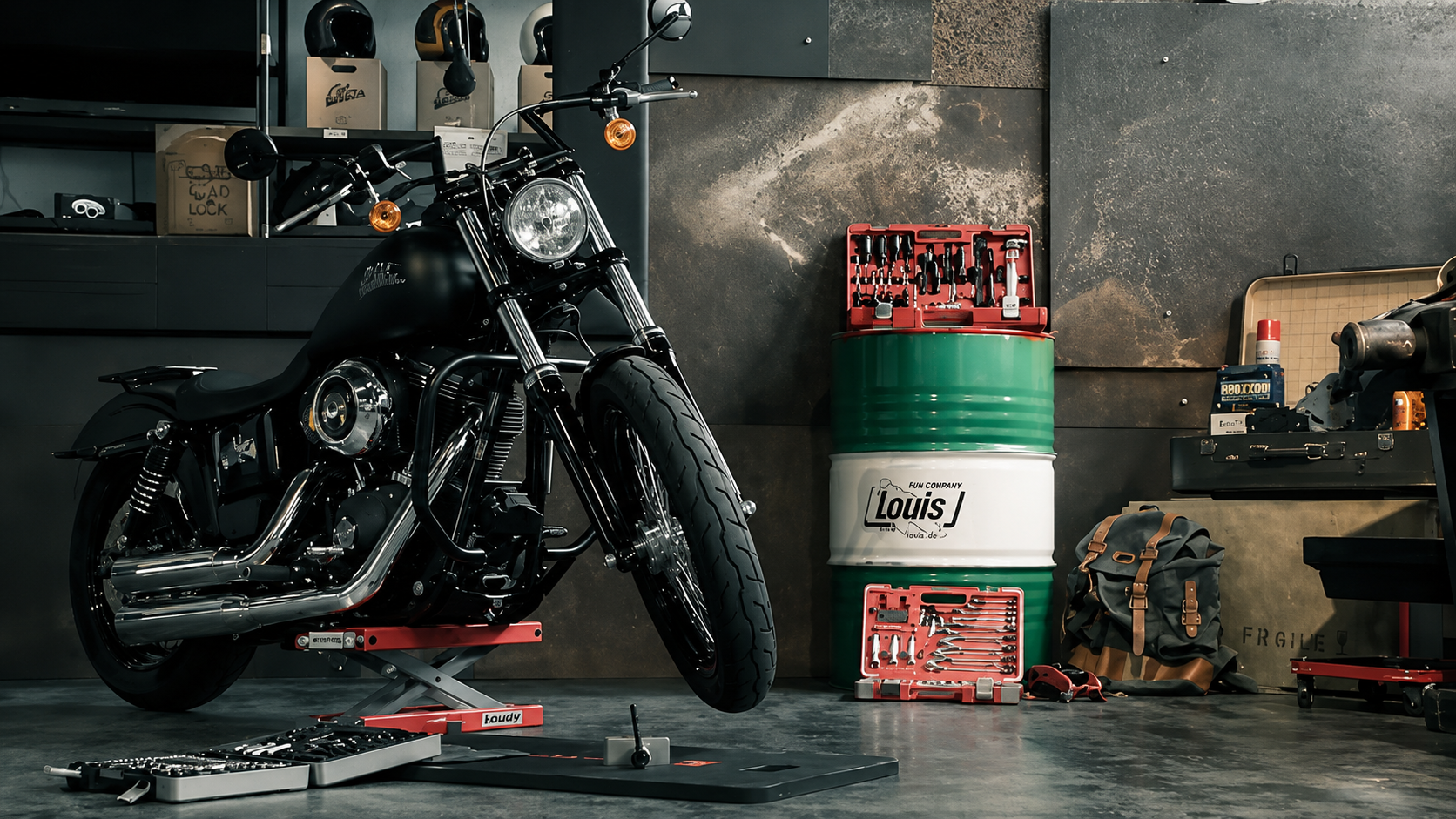
Q: How often does a motorcycle need maintenance? When do you change the oil, clean the chain, and flush the brake fluid?
Maintenance intervals fall into two categories: mileage-triggered and time-triggered. Engine oil and the drive chain are mileage items. Brake fluid is a time item. Tires require a combination of mileage, age, and visible condition. Mixing these categories up is how riders either over-service some items or let others drift indefinitely.
Why Different Items Follow Different Clocks
Components degrade through different mechanisms, so they use different interval logic:
Engine oil (Mileage-driven): Heat cycles, combustion byproducts, and mechanical wear particles are the primary causes of degradation.
Brake fluid (Time-driven): Brake fluid is hygroscopic—it continuously absorbs moisture from the air regardless of whether you are riding. The longer it sits in the system, the more water it contains, which lowers its boiling point.
Tires (Mileage, time, and condition-driven): Tread wear is a mileage factor; rubber hardening and degradation are time and UV exposure factors.
Mileage-Triggered Maintenance
1. Engine Oil
Change intervals vary substantially by motorcycle category:

"I only put 3,000 miles on my bike per year. Do I still need to change the oil annually?" Yes. Oil that has been in the system for more than 12 months should be replaced even if the mileage hasn't triggered the interval. Moisture and oxidation products accumulate during storage and reduce the oil's protective properties. Always replace the oil filter at the same time. Old filter media contains contaminants that immediately compromise fresh oil.
2. Chain Maintenance
Chain care involves two actions with different frequencies:
Lubrication: Every 500 miles, and after riding in the rain (water washes the lubricant off).
Tension check and adjustment: Every 1,000 miles. Most bikes specify 25–35mm of slack at the chain's loosest point.
Chain and sprockets wear together and should be replaced together. When sprocket teeth show visible hook-shaped wear, the chain is also due for replacement. Fitting a new chain on worn sprockets accelerates wear on the new chain, and vice versa. Typical chain lifespan is 15,000–20,000 miles under normal street conditions. Aggressive riding or regular wet-weather riding shortens this significantly.
3. Brake Pads
Wear rates vary widely with riding style, so mileage is only a starting point:
Inspection frequency: Visual check every 3,000 miles; replace when pad thickness is below 2–3mm.
Sport bikes: Average pad life is around 10,000 miles.
Touring and cruiser: Typically 12,000–20,000 miles.
A rhythmic pulsing through the lever or pedal during braking is typically a symptom of rotor warping—inspect rotors at the same time you check the pads.
4. Valve Clearance (The Item Most Riders Defer Longest)
Out-of-spec valve clearances cause progressively louder engine noise, reduced power, harder cold starts, and eventually valve damage. Symptoms develop slowly, which is why this gets deferred more than any other service item. Approximate intervals by platform:
Yamaha MT-07: Every 26,000 miles
Honda CB650R: Every 16,000 miles
BMW R 1250 GS: Every 12,000 miles
Supersport category: Every 6,000–8,000 miles
Valve adjustments require specific tools and disassembly knowledge. Most riders have this done by a professional technician at the appropriate mileage. Depending on the complexity of the motorcycle (especially multi-cylinder models or those with extensive fairings), estimate $300–$1,000+ for dealership labor.
Time-Triggered Maintenance
1. Brake Fluid: Every Two Years, Regardless of Mileage
Brake fluid absorbs moisture from the air continuously while it sits in the system. More water means a lower boiling point and an increased risk of brake fade during sustained heavy use. Two years is the standard interval across most platforms regardless of mileage. If you bought a used bike with an unknown service history, a brake fluid flush is one of the first things to do. Inspect rubber brake lines at the same time—replacement is typically recommended every four years.
2. Coolant (Liquid-Cooled Engines): Every 2 to 5 Years
Coolant's corrosion inhibitors and anti-boil additives degrade over time. While traditional coolant requires replacement every two years, many modern motorcycles use long-life coolant from the factory, extending the interval to 4 to 5 years (check your owner's manual). Inspect radiator hoses at the connection points, as age-related degradation typically starts there.
3. Tires: Inspect Annually After 5 Years, 10-Year Maximum
Rubber hardens under UV exposure and repeated temperature cycling in ways that aren't always visible externally. Once tires reach five years of age, they should be inspected annually by a professional. Regardless of remaining tread, 10 years is generally considered the absolute maximum lifespan. The four-digit production code on the sidewall (e.g., "2424" = 24th week of 2024) tells you the tire's age—check it both when buying new tires and when assessing a used bike.
Pre-Ride Check (5 Minutes, No Tools Required)

Annual Maintenance Cost Reference (DIY vs. Professional)

DIY saves $400–800 per year for riders comfortable with basic mechanical work. For items requiring specific tools or significant disassembly—like valve adjustments, fork oil changes, or wheel bearing replacement—paying a technician is usually more cost-effective than the tool investment and learning curve required for infrequent jobs.
Aktie:
New Product Release: INNOVV N3 Motorcycle Smart Display
4700 Kilometers and Alpine Passes Prove What the INNOVV N3 Can Do