

For a motorcycle dash cam, installation, recording settings, and performance across different road conditions are often easier to understand through real-world riding.
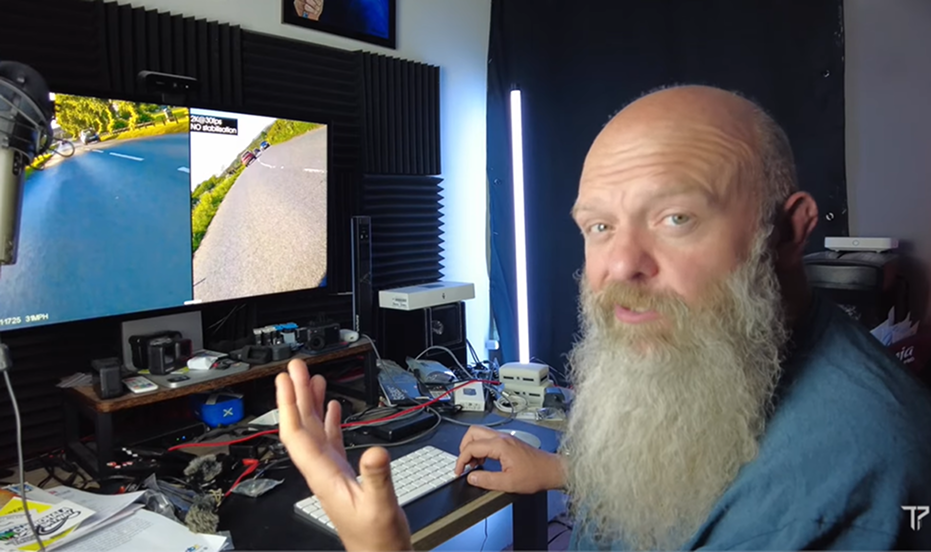
In a video published by motorcycle YouTuber TeapotOne, he installed the INNOVV K7 on a BMW R 1300 GS and tested the system through installation, recording modes, GPS, microphone performance, smartphone connectivity, and different riding conditions.
Here's a closer look at the installation and how the K7's different features performed during the ride.
BMW R 1300 GS: What Matters During Installation?
The K7 is a front-and-rear motorcycle dash cam system that includes two cameras, a DVR, GPS, a handlebar remote, an external microphone, and the required mounting accessories.
In TeapotOne's test, the K7 was installed on a BMW R 1300 GS.
With a permanently installed motorcycle dash cam, camera placement and the location of the main unit are both influenced by the motorcycle's design. The R 1300 GS has relatively limited space around the seat area, so TeapotOne had the installation carried out by professional motorcycle shop A Bike Thing.

During the installation, the wiring was adjusted to suit the motorcycle's layout. For example, the yellow ACC trigger wire was extended to accommodate the location of the power connection. A small spacer was also added to the rear camera to fine-tune its viewing angle.
The installation provides a useful reference for R 1300 GS owners.
For other motorcycles, however, the final setup may differ depending on the frame design, available space, wiring layout, and existing modifications.
Recording Modes for Different Riding Conditions
The K7 offers several recording options, including 2K at 30fps, 1080P at 60fps, and 1080P at 30fps with EIS electronic image stabilization.

TeapotOne tests these modes during the video and compares their footage across different riding conditions.
In good daylight, the 2K mode retains more image detail. This is particularly noticeable when following another vehicle or waiting at an intersection, where details such as license plates can be seen in the footage.
In lower-light conditions and on roads with more noticeable surface movement, TeapotOne also tests the EIS mode. Electronic image stabilization helps reduce some visible camera shake and gives the footage a more stable appearance.
The recording mode can therefore be selected according to the riding environment. Riders who prioritize image detail may prefer 2K, while EIS provides another option when dealing with more noticeable vibration.
Daytime Riding: More Detail in 2K
TeapotOne uses the K7 to record during daytime road testing and shows footage from both cameras.
In the footage presented in the video, the 2K recording provides clear road details under good lighting. When riding behind another vehicle or waiting at an intersection, details such as license plates can also be captured.

For daily commuting, weekend rides, and longer motorcycle tours, front-and-rear recording provides coverage of the road in both directions.
As with any motorcycle camera, actual footage can vary depending on lighting, distance, riding speed, camera angle, and weather conditions.
Night Testing: From City Roads to Low-Light Conditions
TeapotOne also tests the K7 at night.
One section takes place on a road with very little street lighting, relying mainly on the motorcycle's own headlight. He also tests how brake lights, turn signals, and other road lighting appear in the footage.

These scenarios provide a look at how the camera records under different lighting conditions.
In the footage shown in the video, the K7 records the road ahead along with surrounding vehicle lighting.
Nighttime footage can vary considerably with road lighting, headlight output, weather, speed, and camera position, so results may differ between riding conditions.
EIS: An Option for More Vibration on the Road
Motorcycles naturally encounter different levels of road vibration.
During the test, TeapotOne rides with the 1080P 30fps EIS mode around dusk and on uneven roads, then compares the footage with 2K recording.

The footage shows that EIS can reduce some visible image shake caused by motorcycle vibration, giving moving footage a more stable appearance.
For riders who regularly encounter changing road surfaces, this mode can be useful as another recording option.
On smoother roads and in good lighting, the additional detail available from 2K may be more useful.
10Hz GPS: Recording the Ride Beyond Video
GPS is another part of the K7's feature set.
The K7 uses a 10Hz GPS module, allowing location data to be updated at a higher frequency.

GPS may not be something riders pay much attention to during a short daily commute, but it becomes more useful during longer motorcycle trips, route recording, and riding content creation.
The K7 records riding speed and GPS information, which can be reviewed through compatible software. Dashcam Viewer can also be used to export GPX route data.
For riders who enjoy documenting motorcycle trips, this adds route information alongside the video footage.
Handlebar Remote: Convenient Access While Riding
The K7 includes a handlebar remote for commonly used functions.
TeapotOne demonstrates using the remote to lock the current recording and shows how its indicators display the operating and GPS status.

For a permanently installed motorcycle dash cam, having commonly used controls within reach can reduce the need to interact with a smartphone.
More detailed settings, such as recording mode, microphone volume, and loop-recording duration, can be adjusted through the App when the motorcycle is parked.
Parking Monitoring: Recording While the Motorcycle Is Parked
The K7 supports G-Sensor-based parking monitoring.
When qualifying vibration or impact is detected while the motorcycle is parked, the system can record according to the configured settings.
For riders who regularly park in public areas or make stops during longer trips, this provides another way to keep a record while the motorcycle is stationary.
Actual operation depends on factors such as the power setup, G-Sensor sensitivity, and trigger conditions, so settings can be adjusted according to the motorcycle and parking environment.
Large-Capacity Storage for Longer Rides
The K7 supports MicroSD cards up to 512GB.
With the settings shown in the video, a larger-capacity card can provide more storage for front-and-rear recordings during longer rides.
For daily commuting, this can reduce how often riders need to manage the memory card. For motorcycle touring, it provides more room for continuous riding footage.
The K7 also supports 1-, 3-, and 5-minute loop-recording segments, allowing riders to choose the interval that suits their needs.
The App: Live View and Video Management
The K7 connects to a smartphone over Wi-Fi through the INNOVV App, allowing riders to view live footage and manage recordings.
TeapotOne demonstrates the live preview interface and switches between the front and rear camera views.

The front and rear cameras save their respective full-size recordings, so riders can review footage from either direction as needed.
The video also tests 5GHz Wi-Fi video transfer.
Based on TeapotOne's experience, the K7 offers noticeably faster video transfer than the INNOVV K3 and K5 units he had previously used.
For riders who frequently move recordings to their phones, faster transfer can make everyday footage management more convenient.
Helmet Audio: Wind Noise Matters for Motorcycle Vlogging
TeapotOne also tests the K7's external microphone.
He places the microphone inside his helmet and compares its audio with the microphone on an Insta360 Ace Pro.
One practical point from the test is that wind noise becomes more noticeable as riding speed increases.
TeapotOne therefore recommends adjusting the microphone volume according to the riding environment. During higher-speed riding, he prefers a lower microphone setting to help manage wind noise.
If the K7 is being used for motorcycle vlogging, microphone placement is also worth testing before a ride. Helmet design and microphone position can both affect the final audio.
From BMW R 1300 GS Installation to Real-World Testing
TeapotOne's test covers several stages, from installation to actual riding.
The video looks at the installation space on the BMW R 1300 GS, recording-mode selection, daytime and dusk footage, and nighttime riding.
Rather than focusing only on specifications, the test places the K7 in a real motorcycle setup and shows how the system is used on the road.
One practical point that stands out is that the installation of a fixed motorcycle dash cam is closely connected to the motorcycle itself.
Camera placement needs to work with the motorcycle's structure and desired viewing angle, while the main unit and wiring need to be positioned around the available space.
The setup shown on the BMW R 1300 GS is therefore best viewed as a specific installation example, while riders of other motorcycles can use it as a reference when planning their own setup.
Who Might Consider the K7?
Based on the test, the INNOVV K7's feature set can fit several common motorcycle riding scenarios.
Daily Commuting
Front-and-rear cameras can continuously record the ride, while the fixed installation suits riders who want to keep a dash cam permanently mounted on their motorcycle.
Motorcycle Touring
Dual 2K recording, 10Hz GPS, and large-capacity MicroSD support can be useful for recording longer rides and route data.
Motorcycle Vlogging
The external microphone provides a way to record helmet audio, while GPS data can help preserve the route as part of the riding footage.
Permanent Installation
The K7 uses a fixed installation design, making it suitable for riders who prefer to keep their recording system installed on the motorcycle.
Final Thoughts
TeapotOne installed the INNOVV K7 on a BMW R 1300 GS and tested its recording, EIS, GPS, microphone, App, handlebar remote, and parking-monitoring functions across different riding conditions.
The test presents the K7 as a motorcycle dash cam system designed around permanent installation and front-and-rear recording.
The 2K mode is suited to riding situations where image detail is important, while EIS provides another recording option for roads with more noticeable vibration. The 10Hz GPS adds route and speed data, while the external microphone provides another way to capture riding audio.
If you are considering a front-and-rear motorcycle dash cam for a BMW R 1300 GS or another motorcycle, TeapotOne's test offers a practical look at how the INNOVV K7 can be installed and used on the road.
Share:
Motorcycle Theft in 2026: What Riders Should Know
How to Choose an ADV Motorcycle?