

Welcome to the official INNOVV blog. For motorcycle owners looking to install aftermarket electronic devices, the choice between a hands-on DIY installation or utilizing a professional workshop typically depends on individual technical experience and the specific bike layout.
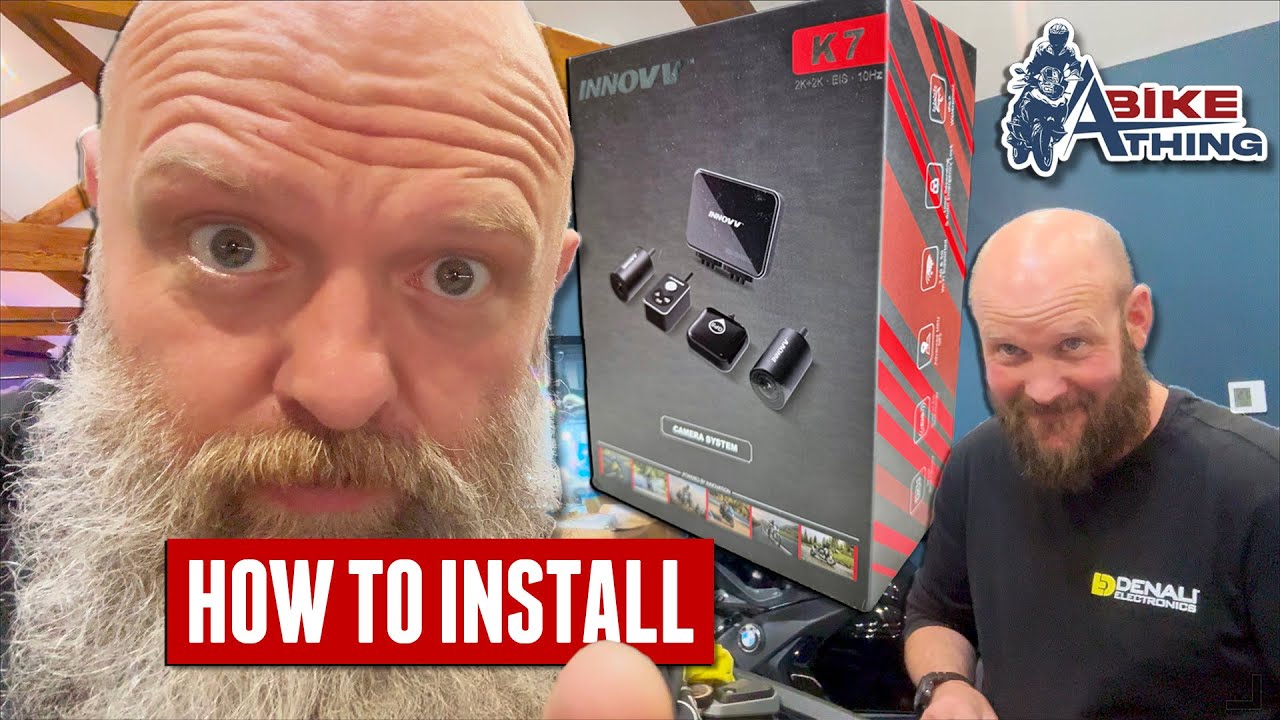
Motorcycle vlogger TeapotOne detailed his decision to have the INNOVV K7 Dashcam fitted onto his BMW R1300GS by the experienced team at A Bike Thing (Tom and Steve). Because the under-seat space on this model is quite limited, and the bike was already equipped with several aftermarket accessories, he opted for a professional installation to ensure the cleanest possible cable routing.
Because the R1300GS features unique structural dimensions, we have embedded the complete video guide below and detailed the technical requirements observed during the build. This factual overview aims to provide reliable reference and guidance for riders who are either planning a DIY setup or visiting a local shop.
Video Timecodes & Chapter Guide
If you want to skip directly to specific segments of the installation video, you can refer to the following timecode guide:
00:43 – Removing the front cowl (under the beak) and side plastic panels of the R1300GS.
03:21 – Discussing the wiring method: How to correctly connect the ACC ignition signal wire to retain the parking mode function.
05:55 – Managing the tight under-seat clearance of the R1300GS: Tom reroutes and optimizes the front camera cable layout on-site.
11:42 – The final placement and mounting location of the front camera underneath the front beak.
14:20 – Installing the rear camera using the standard K7 L-bracket with a custom-added spacer.
16:56 – Positioning the DVR module underneath the seat and performing the seat clearance check.
22:06 – Securing the GPS module completely hidden inside the front plastic fairing panels.
Technical Facts & Installation Notes
1. Wiring Recommendations for the Parking Function
During the teardown, Tom noted that if the INNOVV K7 has its main power cut completely by an aftermarket power management module or CAN-bus controller when the ignition turns off, the camera's parking function—which triggers recording via the G-sensor if the parked motorcycle is shaken or disturbed—may not operate as intended.
Recommended Wiring Method: It is recommended that the main power harness connect directly to the battery's 12V supply to draw constant power, while the yellow trigger wire connects to an ignition-switched live source (ACC) to signal when the bike is turned on or off.
2. Adjusting Cable Routing for the R1300GS Layout
The BMW R1300GS has a completely different battery and component layout compared to older R1200 or R1250 models, leaving very limited space under the seat. Tom pointed out that the front camera cable required careful rerouting to safely navigate the bike's specific configuration. To achieve a secure layout and avoid any bodywork pinching, Tom precisely rerouted the line and applied standard protective sleeving to ensure proper wire isolation.
3. Adjusting Camera Placement for Aftermarket Accessories
Front Camera: TeapotOne had a headlight guard fitted to his bike, which clearance issues would cause the custom grid adapter mount to bind. Instead, Tom used the standard 3M adhesive pad from the INNOVV kit to mount the camera directly under the front beak. This placement keeps the camera secure, and it can be slid out for maintenance by loosening the standard hex bolts on the bracket.
Rear Camera: The rear camera was mounted below the tail section using the kit's standard L-bracket. To ensure proper alignment, Tom added a custom spacer from his workshop and dremeled a small notch into the edge of the plastic trim to route the cable without pinching it.
4. DVR Module Positioning and Clearances
On the INNOVV K7, the input cables exit from the bottom of the DVR module, and the SD card slot is protected by a rubber cover on the side. Tom applied 3M Velcro patches to mount the DVR under the seat rather than adhering it permanently. This allows the user to easily unclip the module when removing the SD card.
Note on Seat Clearance: The R1300GS seat mechanism (including the heated seat hooks) fits very tightly against the frame. Tom placed the DVR module carefully in the center and repeatedly tested the mechanism to ensure the front and rear seats can latch properly without crushing the unit or the cables.
5. GPS Module Hidden Placement
The external GPS module does not need a direct, open line of sight to the sky to function. Tom hid the GPS sensor completely underneath the front plastic fairing panels. During the final system check via the INNOVV smartphone app, Tom successfully acquired a full GPS satellite signal even while inside the enclosed workshop.
Summary
On complex flagship models like the BMW R1300GS, where internal real estate is heavily restricted, standardized wire management and accurate component tracking are essential for system longevity. Reviewing the real-world clearance and routing facts of this build provides a practical baseline for any future dual-lens camera installation.
Want to check the detailed product specifications? Explore the official INNOVV K7 Dashncam Product Page.
Share:
Motorcycle Dash Cam Installation: 3 Key Technical Standards for Reliable Operation
Why Is My Motorcycle Battery Dead After a Few Days?