

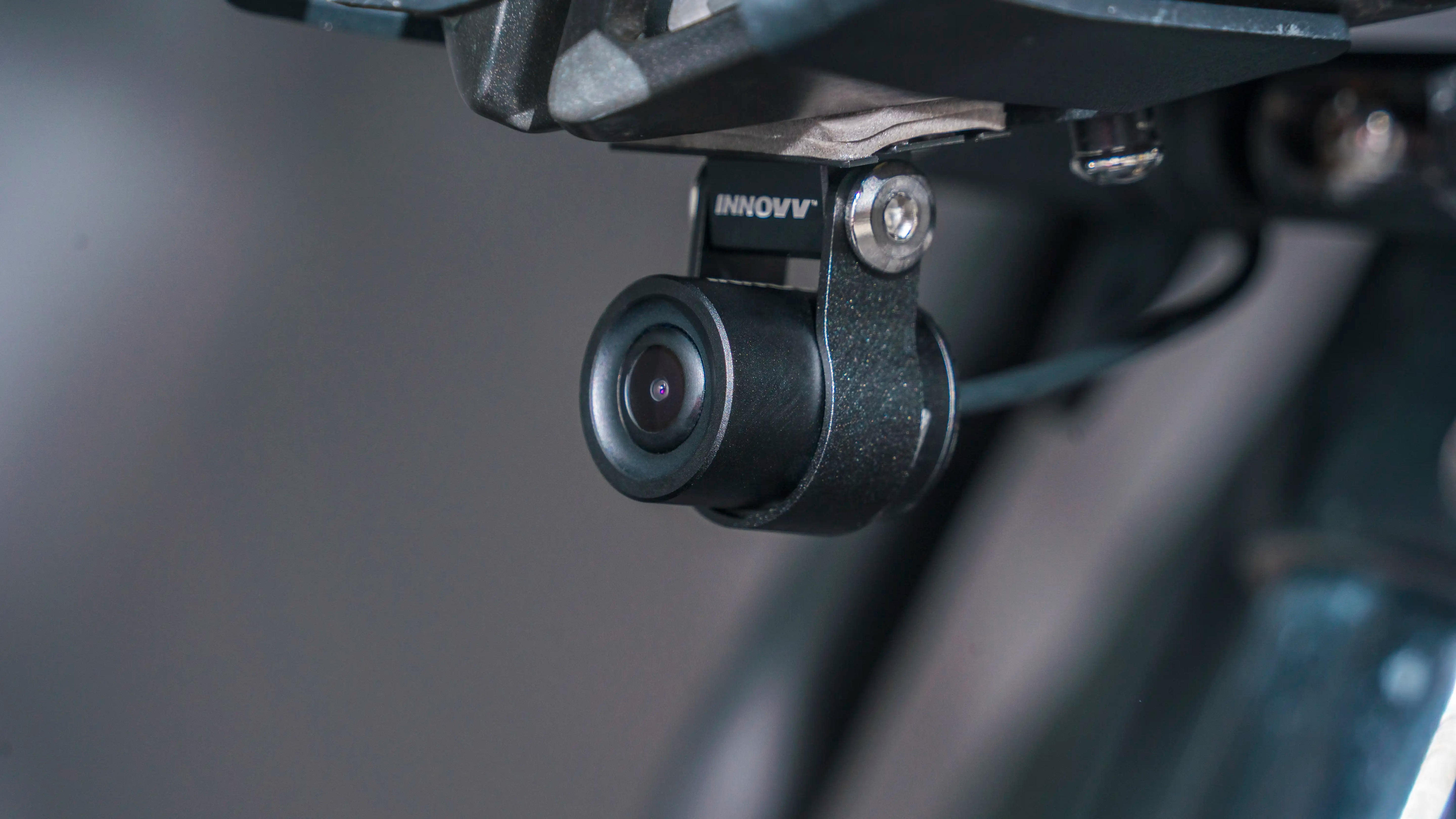
Q: INNOVV makes the K6, K7, and RC6 dashcams. Which one actually fits my riding?
The K6 is built for riders who want a lightweight dashcam with a simple setup. The K7 is for riders who want more complete recording capabilities in a standalone dashcam. The RC6 combines dashcam recording with blind spot detection in one system, making it a practical choice if you’re planning to run both.
The right choice ultimately depends on how you balance image quality, installation, and the features you actually need.
Three Dashcams, Three Different Approaches
K6: Keep It Simple
The K6's front camera shoots 2K 30FPS, while the rear camera records at 1080P 30FPS. Its cylindrical body weighs just 65g, making it the smallest and lightest dashcam in INNOVV's lineup.
Power input supports either USB Type-C (5V/2A) or direct motorcycle battery connection, giving you more flexibility when choosing where to mount the unit and simplifying cable routing. Both front and rear cameras carry IP67 waterproofing, and the K6 supports SD cards up to 256GB.
The K6 suits riders who don't need GPS track recording, don't require 2K on the rear camera, and want to keep installation as uncomplicated as possible. It covers the core dashcam functions without adding unnecessary complexity to the setup.

K7: More Detail, More Control
The K7 is INNOVV's most fully featured standalone recording product. Both front and rear cameras support 2K 30FPS or 1080P at 60FPS, with Electronic Image Stabilization (EIS), F1.8 aperture, and Sony sensors. The front and rear cameras share the same 6G+1IR lens structure, helping maintain consistent color rendition and image character between both channels.
The K7 body is larger and heavier at 150g, and cable routing is more involved. Both front and rear cameras carry IP67 waterproofing. Maximum SD card support is 512GB.

RC6 BikeGuard: Recording Meets Blind Spot Detection
The RC6 integrates a K6-spec dashcam, with 2K front and 1080P rear recording, with INNOVV's ThirdEYE blind spot detection system in a single product.
For riders who are already planning to use both a dashcam and a blind spot detection system, the RC6 costs less than buying the K6 and ThirdEYE separately, while also consolidating the installation and wiring into one process.
It's the right choice for riders who want both recording and blind spot alerts without having to install and wire two separate systems.

What the K7 adds over the K6:
· 10Hz GPS: Higher-precision route tracking and speed overlay on footage.
· Dual-band Wi-Fi (2.4G/5.8G): Faster footage transfer to your phone.
· External microphone: Ambient sound recording for riders who vlog or want more control over their audio.
· Three status indicator lights: Separate indicators for recording, GPS, and Wi-Fi, each with its own alert pattern for fault conditions.
What About Night Recording?
The K7 uses an F1.8 aperture on both front and rear cameras with Sony sensors, giving it an advantage over the K6's front camera, which uses an F2.0 aperture, in low-light conditions. The difference can show up in nighttime road surface detail and license plate legibility.
It's worth noting that the K6's rear camera also uses an F1.8 aperture — it's the front camera that uses F2.0.
The Features That Keep Your Footage Protected
Loop recording and G-sensor protection are two features that make dashcam footage useful when you actually need it.
· Loop recording: When the SD card fills up, the oldest unprotected clip is automatically overwritten. Without loop recording, a full card means the camera eventually stops recording.
· G-sensor protection: When the sensor detects an impact above its threshold, the current clip is automatically locked and excluded from loop overwriting.
The K6, K7, and RC6 all include both features. The K7 additionally supports manual clip protection through the wired remote, which is useful if you spot a dangerous situation ahead and want to manually lock the current footage before anything happens.
At a Glance: K6, K7, and RC6

So, Which One Fits Your Ride?
A dashcam or safety system delivers its true value when it fits the way you actually ride. It’s simply a matter of choosing the configuration that best matches your riding habits, priorities, and motorcycle setup.
You can easily find your fit based on what matters most to you:
Want a Lightweight, Simple Setup?
If your riding consists mostly of daily commutes or short trips, and you prefer to keep your bike's lines clean without dealing with complex wiring or an extra GPS module, take a look at the INNOVV K6 Product Page.
Want Better Video and More Features?
If you frequently go on long-distance tours or night rides, require high-precision 10Hz GPS to log your routes, and want consistent color and stabilization from both front and rear channels, take a look at the INNOVV K7 Product Page.
Want Dashcam + Blind Spot Detection?
If you plan to equip your bike with both a recording system and blind spot alerts, and want to minimize redundant cable routing while lowering the overall equipment cost, take a look at the RC6 BikeGuard Product Page.
Every mile of your journey deserves reliable recording and safety support. You can visit the corresponding product pages to explore more detailed installation examples and technical specifications.
If you have any questions about wire routing or compatibility with your specific motorcycle model, feel free to reach out to our support team for guidance on your setup. We’ll see you on the road!
Partager:
INNOVV N2 vs N2 for BMW vs N3: Which One Is Right for You?
INNOVV ThirdEYE Blind Spot Detection: Mirror vs. Watch Version