

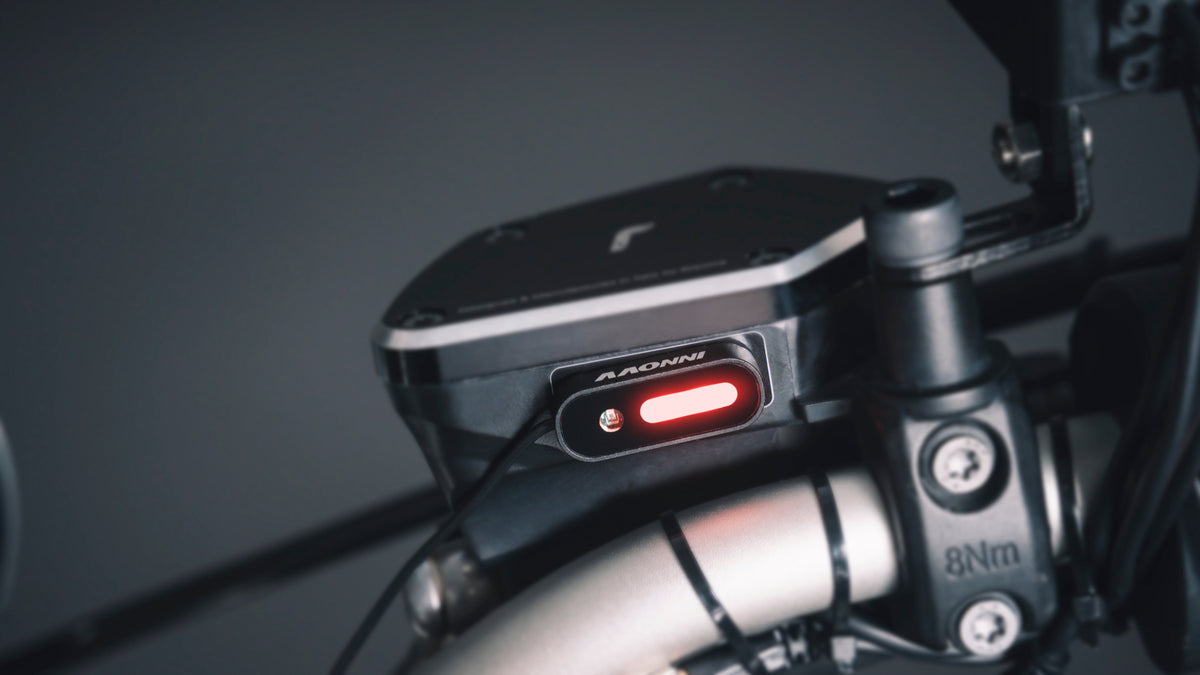
In daily riding and touring, vehicles approaching from the rear or sides can sometimes be difficult to notice in time. The INNOVV ThirdEYE Radar Blind Spot Detection System provides visual and audible alerts to add another layer of awareness while riding.
If you're choosing between the ThirdEYE Mirror Version and Watch Version, the core radar capability is not the main difference. The key considerations are how the alerts are displayed, where the display is installed, and which layout better fits your riding habits.
Mirror vs. Watch: What's the Difference?
|
|
||
|
Display Format |
Two separate left and right display modules |
One centralized round display |
|
Display Position |
Near the mirrors or on the left and right sides of the motorcycle |
Handlebar / dashboard area |
|
Alert Direction |
Left and right alerts shown separately |
Left and right alerts shown on one display |
|
Best For |
Riders who prefer split left/right alerts |
Riders who prefer centralized information |
Both versions use the same 77–79 GHz millimeter-wave radar and share the same core detection specifications. The main difference is the display and mounting format.
Mirror Version: Split Left and Right Alerts

The Mirror Version uses two separate display modules, one for each side of the motorcycle.
When a vehicle is detected and the relevant warning conditions are met, the corresponding indicator lights up or flashes, accompanied by an audible alert.
This layout is well suited to riders who are accustomed to checking their mirrors and prefer to have left and right alerts positioned separately on each side of the motorcycle.
Watch Version: Centralized Display

The Watch Version uses a single round display mounted around the handlebar or dashboard area.
Left and right indicators correspond to the direction of an approaching vehicle, bringing all warning information together in one location along with audible alerts.
This layout is suitable for riders who prefer to view all ThirdEYE alerts from a single, centralized position.
Note: Despite its name, the Watch Version is not designed to be worn on the wrist. It is a motorcycle-mounted round display.
How Does the 77–79 GHz Radar Work?
ThirdEYE uses a 77–79 GHz millimeter-wave radar to monitor vehicles approaching from the rear and sides of the motorcycle.
Within its specified detection range, the radar can identify and track multiple targets and provide different warning patterns based on the target's position and relative movement.
BSD — Blind Spot Detection
0.2–6 m
When a vehicle enters the relevant blind spot detection area and meets the warning conditions, the corresponding indicator remains solid ON, accompanied by an audible alert.
LCA — Lane Change Assist
0.2–50 m
When a detected vehicle meets the relevant lane-change warning conditions, the corresponding indicator flashes, accompanied by an audible alert.
RCW — Rear Collision Warning
0.2–50 m
When a vehicle approaches rapidly from directly behind and meets the relevant warning conditions, both indicators flash simultaneously, accompanied by an audible alert.
ThirdEYE Radar Specifications
|
Parameter |
Official Specification |
Note |
|
Operating Frequency |
77–79 GHz |
Millimeter-wave radar |
|
Detection Range |
0.2–50 m |
Target detection within the specified range |
|
Horizontal Angle |
120° |
Wide-angle radar coverage |
|
Beam Pitch Angle |
±25° |
Vertical coverage |
|
Range Accuracy |
0.11 m |
Reference range accuracy |
|
Speed Range |
-210 to +210 km/h |
Relative speed detection range |
|
Data Update Rate |
50 ms |
Target data update interval |
|
Simultaneous Targets |
Up to 64 |
Maximum number of detected targets |
|
Operating Temperature |
-40°C to +80°C |
Operating temperature range |
|
Protection Rating |
IP67 |
Water and dust resistance |
|
Operating Voltage |
9–16V DC |
Motorcycle power input |
|
Power Consumption |
<3.5 W |
Rated power consumption |
How Does Installation Differ?
The radar detector is installed in essentially the same way on both versions, while the display installation differs.
Radar Detector
The radar detector is installed toward the rear of the motorcycle, such as around the tail light or beneath the license plate.
· Recommended height: 40–130 cm
· Recommended pitch: 10° ±2°
· Face the radar toward the rear of the motorcycle
· Keep the INNOVV logo facing upward
· Avoid unnecessary metal obstruction in front of the radar
· Red wire to ACC
· Black wire to the battery negative terminal
· Input voltage: 9–16V DC
Mirror Version
The two display modules are installed separately on the left and right sides of the motorcycle. They can be positioned near the rearview mirrors or at other suitable locations.
Watch Version
The round display is mounted around the handlebar or dashboard area, allowing both left and right alerts to be viewed from one centralized position.
In other words, the radar installation determines the detection system's operating position, while the display installation determines how you receive the alerts.
Which Version Is Right for You?
The choice between the two versions is straightforward.
Choose the Mirror Version if you:
l Prefer separate alerts on the left and right sides;
l Want the warning indicators positioned near the rearview mirrors;
l Prefer the alert direction to correspond directly with the display position;
l Want to position the two display modules independently.
Choose the Watch Version if you:
l Prefer one centralized display area;
l Want to view both left and right alerts on a single screen;
l Prefer a round, gauge-style display;
l Have a handlebar or dashboard area that is better suited to a centralized display.
In short:
Mirror Version = Split Left & Right Alerts
Watch Version = Centralized Alerts
The choice is mainly about display experience and installation layout, rather than differences in core radar detection capability.
Riding Tips & Routine Maintenance
ThirdEYE is designed to provide supplementary awareness of surrounding traffic. During every ride, continue using your mirrors, direct observation, and normal riding judgment.
Understand the Detection Profile
The system is primarily designed to detect moving motor vehicles and motorcycles. Detection of pedestrians, bicycles, and smaller targets may differ, so direct observation remains important.
Complex Riding Environments
In dense traffic, areas with significant surrounding interference, or situations where road conditions and surrounding targets change rapidly, the complexity of the environment may affect radar detection.
Continue monitoring surrounding traffic and consider the overall road environment when making riding decisions.
Simple Routine Care
After longer rides, dust, mud, or other road debris may accumulate on the radar surface. If needed, gently wipe the radar with a clean, damp cloth to keep its surface clear.
Partager:
INNOVV Dashcam Buyer’s Guide: K6, K7, or RC6?
Motorcycle Theft in 2026: What Riders Should Know