

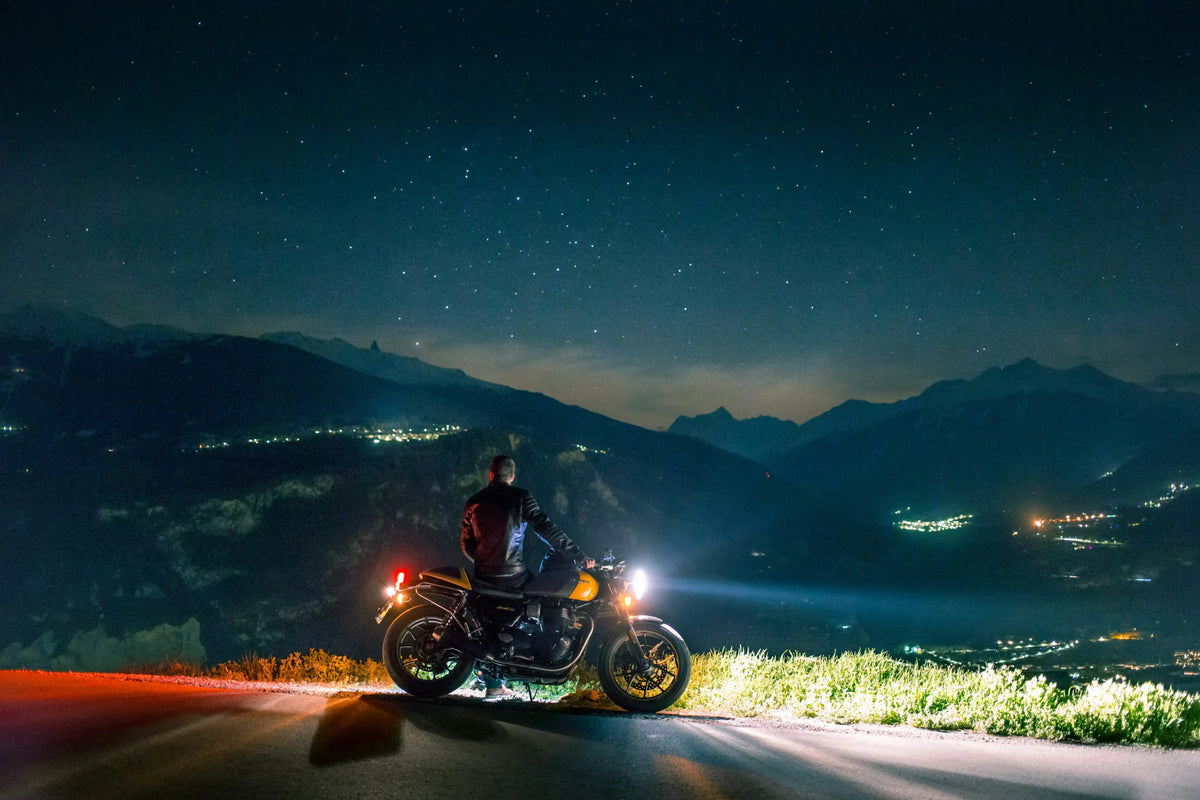
Night riding brings a different set of challenges for motorcyclists. Potholes are harder to spot, oncoming headlights can cause glare, and other drivers may not notice a motorcycle until it's close. With a few adjustments to your riding habits and pre-ride routine, you can better prepare for the road after dark.
Adjust Your Speed to What You Can See
Your headlight only illuminates part of the road ahead. If you're traveling too fast to stop within the distance you can see, a hazard may appear before you have time to react.
Slow down on unfamiliar roads, through tight corners, and in poorly lit areas. Leave more following distance than you might during the day, giving yourself extra time to respond to sudden braking or obstacles.
Make Yourself Visible to Other Drivers
Check your headlight, tail light, brake light, and turn signals before setting off. Keep your headlight lens and helmet visor clean, and choose a clear visor for night riding. Bright gear and reflective details can also help other drivers spot you in low-light conditions.
A motorcycle blind spot detection system, such as INNOVV ThirdEYE, provides an additional alert when vehicles enter its monitored blind spots. It can help you stay aware of nearby traffic, but you should still check your mirrors and blind spots before changing lanes.
Look Out for Common Nighttime Hazards
Some hazards are much harder to identify after dark. Keep an eye out for:
· Potholes and road debris: Shadows can hide uneven pavement, loose gravel, and objects in your path.
· Wildlife: Animals may cross suddenly, particularly on rural roads. Watch the road edges as well as the road ahead.
· Turning vehicles: Drivers may misjudge your distance or fail to see you at intersections. Approach with caution and be prepared to slow down.
· Headlight glare: Avoid looking directly into oncoming headlights. Keep your attention on your path and the visible road edges.
Looking farther ahead gives you more time to recognize hazards and adjust your speed smoothly.
Check Your Bike and Prepare for the Weather
Before riding, make sure your lights work properly and your headlight beam is aimed correctly. Check your tires, brakes, and mirrors, too. If you regularly ride on unlit roads, consider whether your lighting is suitable for those conditions, and make sure any auxiliary lights comply with local regulations.
Temperature can drop quickly after sunset. Wear suitable layers and gloves that keep your hands warm without restricting control operation. Fog, rain, and a fogged-up visor can further reduce visibility, so check the forecast and stop somewhere safe if you can no longer see clearly.
Know When to Call It a Night
Fatigue can make it harder to concentrate and react to changing traffic. Frequent yawning, heavy eyelids, missed road signs, or difficulty remembering the last few miles are warning signs that you need to stop.
Take a break in a safe place. If you're struggling to stay awake, don't try to push through the ride. End the trip and arrange another way to reach your destination if necessary.
Before You Ride: A Quick Checklist
· Check all lights and signals.
· Clean your headlight, mirrors, and visor.
· Wear suitable gear with reflective details.
· Check your tires and brakes.
· Review the weather and route.
· Adjust your speed to visibility and leave enough following distance.
· Make sure you're alert enough to ride.
Final Thoughts
Night riding requires more attention to visibility, road conditions, and your own physical state. Keep your bike in good condition, make yourself easier to see, and leave enough time to react to hazards. If visibility deteriorates or fatigue sets in, stopping is often the safest decision.
Share:
KTM 890 Adventure Gets the INNOVV RC6: UPShifting Adventures’ Hands-On Review